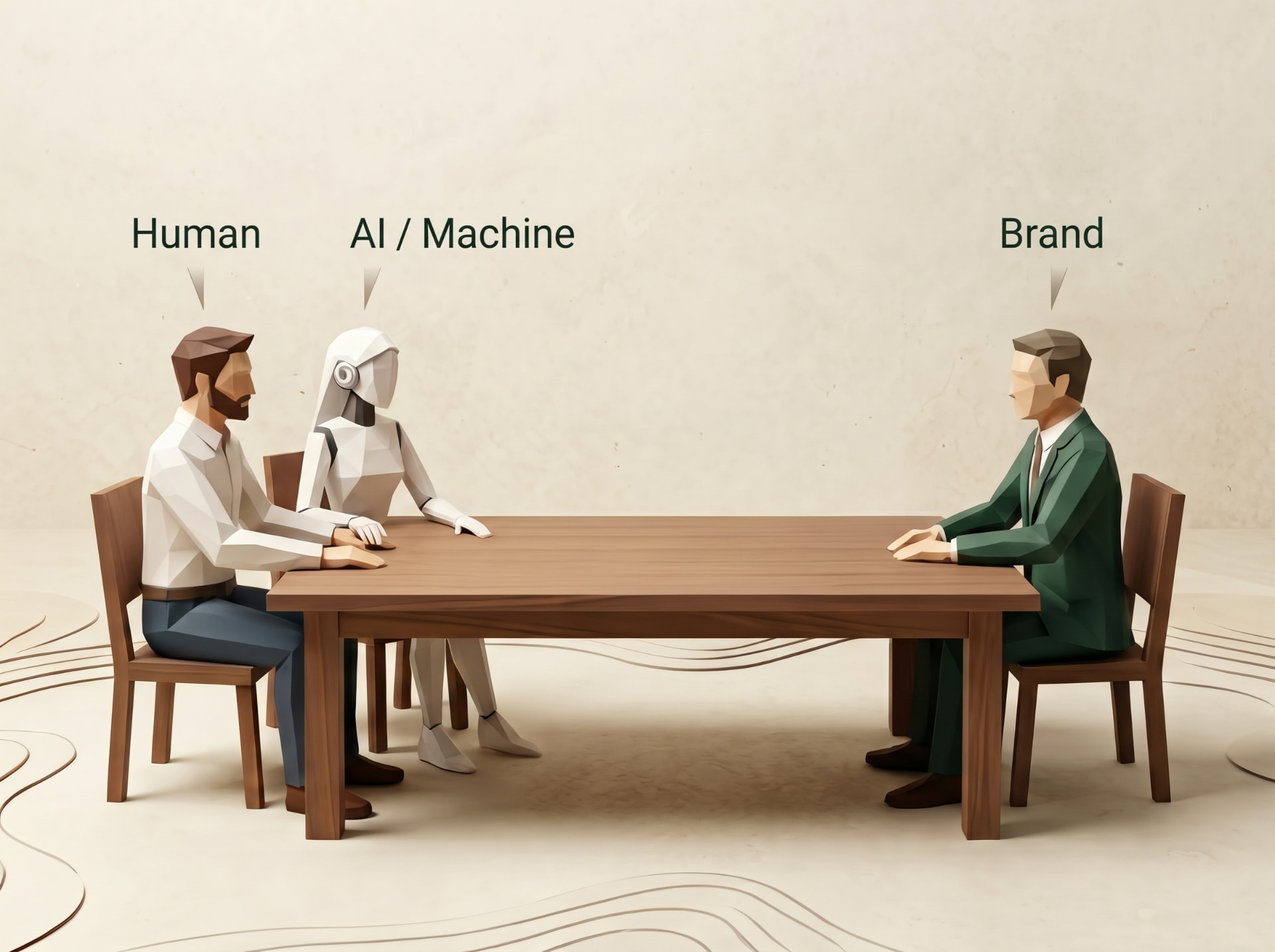
The Kitchen Gadget CMO.
We keep buying appliances. The customer is still waiting for dinner. On martech sprawl, half-used AI, and why the missing layer is orchestration, not capability.


Every marketing function has a cupboard like this.
The attribution platform nobody quite trusts. The intent tool sales checks when reminded. The content engine that can produce 40 assets before anyone has decided what deserves to be said. The social listening dashboard. The ABM platform. The journey orchestrator, apparently hired to orchestrate the other orchestrator. And now an assortment of AI copilots and agents, each promising to give the team its time back.
Each purchase was rational. Together they created the Kitchen Gadget CMO: an immaculate collection of appliances and no reliable way to get dinner onto the table.
The idea
A gadget can make one task faster. A system makes the commercial outcome more likely. We keep confusing the two.
This is not a comment on any CMO's intelligence. It is what happens when every urgent problem arrives with a demo, a discount and a procurement deadline, while the operating model remains nobody's product to sell.
We did not run out of tools
By May 2026 the marketing technology landscape contained more than 15,000 products. Essentially flat year on year, but only after 1,400 products entered and 1,300 disappeared. The cupboard has not become calmer. It has become a high speed carousel with annual contracts.
The demand side is less impressive.
Gartner's 2025 marketing technology survey puts utilisation at 49%, consuming 22% of marketing spend. Half used technology is a capital allocation problem with a login screen.
The licence fee is only the visible cost. Every new appliance also asks for:
- data and integration work
- permissions and governance
- training and change management
- reporting nobody reads twice
- a named human who remembers why it was bought after the sponsor changes jobs
A tool that costs less than an agency may still cost more than its invoice once five teams have to work around it.
Most stacks are not short of capability. They are short of composition. One more dashboard does not reconcile three definitions of a qualified account. One more content engine does not decide which customer problem the brand should own. One more agent does not make marketing and sales agree on what happens next. That is the same gap we wrote about in the most expensive line item in marketing.
The gadget is not the kitchen
AI has increased the velocity of temptation. McKinsey's June 2026 marketing research found that 90% of CMOs were experimenting with AI use cases, and fewer than 10% had scaled it. Only 28% of organisations were fundamentally rewiring teams and workflows.
We have added AI to the existing kitchen and are surprised that it produces the same dinner faster.
AI in marketing: experiment, scale, rewire
McKinsey marketing research, June 2026.
A kitchen is a useful operating model.
- Strategy decides what should be served, for whom and why.
- Execution chops, cooks and plates.
- Orchestration sits at the pass: sequencing work, resolving dependencies, checking quality, making sure the parts arrive together.
Almost every vendor sells you a faster knife, a smarter oven or a robot line cook. Almost nobody sells you the pass.

Without it, every task can look efficient while the whole workflow stays slow. The asset is generated in minutes and waits three days for approval. The campaign launches with an audience definition sales does not recognise. The lead reaches the CRM but the context does not. Performance data arrives after the next campaign has been briefed. The air fryer is efficient. Dinner is still late.
The hidden cost lives between the tools
Tool sprawl is expensive because work does not happen inside tools. It happens across them. The seams create four quiet taxes:
- Decision drag when ownership is unclear.
- Data decay as records are copied and reinterpreted.
- An adoption tax as people learn interfaces instead of improving judgement.
- Accountability fog when every platform contributed and nobody owns the outcome.
This is why a local productivity win can coexist with a global performance loss. Saving 20 minutes on copy is useful. Saving 20 minutes on copy while adding another review queue, another export and another version of the truth is theatre with a timer. We made the same argument about hours saved in the AI ROI trap.
The question is not whether the tool worked. It is whether the route from signal to decision to experience to revenue became shorter, clearer or more reliable.
The same warning now applies to the agent boom. Gartner forecasts that more than 40% of agentic AI projects will be cancelled by the end of 2027, on escalating costs, unclear business value or inadequate risk controls. Its advice is telling: use agents when decisions are needed, automation for routine workflows, assistants for retrieval, and rethink workflows from the ground up when the value justifies it.
Buying an agent before redesigning the workflow is the corporate equivalent of buying a pasta maker because Tuesday felt repetitive.
Five moves I would make
I am not proposing a ceremonial bonfire of the stack. Specialist tools can be excellent. But every tool must earn a place in a commercial system.
1. Name the meal before approving the appliance. Start with a commercial job: shortlist inclusion, launch cycle time, opportunity conversion, cost to serve, retention. Then name the workflow that must change, its baseline, the target, the business owner and the decision the technology will improve. "It creates content faster" is a feature. "It cuts campaign cycle time without lowering qualified pipeline" is a case.
2. Empty the cupboard. Run a 30 day audit of every tool: annual cost, named owner, active users, core workflow, capabilities actually used, data dependencies, overlap, integration health, measurable outcome. Classify each as keep, fix, consolidate or retire. No orphan licence gets tenure because cancelling it feels impolite.
3. Write the recipe before automating it. Map the route from customer signal to team decision to customer experience to revenue. Find the waits, duplicate decisions, manual workarounds and conflicting data. Remove unnecessary steps before assigning the remaining ones to humans, automation or agents. AI should enter a designed workflow with clear inputs, guardrails, exception paths and feedback loops, not inherit twenty years of organisational sediment.
4. Put someone at the pass. Give one senior operator authority across the end to end workflow: sequence, decision rights, data standards, quality bar, adoption plan. Not a steering committee. A committee can discuss dinner beautifully. The pass needs one person who can send a plate back. That role is what an embedded CMO and marketing team is actually for.
5. Measure dinner, not appliance activity. Track cycle time, cost to serve, qualified opportunity rate, shortlist inclusion, stage velocity, win rate, deal value, adoption and retention. Logins, prompts, assets produced and hours saved are diagnostics, not the victory speech. If a metric cannot survive the CFO's raised eyebrow, it should not lead the slide.
Fewer gadgets. Better dinner.
The answer is not one giant platform, and not a minimalist stack assembled for aesthetic pleasure. It is a deliberate system: enough capability to do the work, enough integration to move context, enough governance to protect trust, and enough ownership to improve the whole rather than admire the parts.
Composability without composition is clutter with an architecture diagram.
Strategy decides the meal. Orchestration aligns the ingredients, people and timing. Execution delivers. In that order. Technology can strengthen every layer. It cannot substitute for the missing one in the middle. That sequencing is the whole basis of the operating rhythm that lets a small team ship.
What to ask on Monday
Ask for one slide. For every material platform or AI initiative:
- What business job does it perform?
- In which end to end workflow?
- Owned by whom?
- Measured how?
- What would break if we switched it off?
Blank cells are not an invitation to write better descriptions. They are the beginning of the cupboard audit.
The better question
Not "what else can this tool do?" but "what commercial job does our system do better because this tool exists?" If nobody can answer, put it back in the cupboard. Or better still, cancel the renewal.
Related reading: how I would build a marketing org chart today, retire the campaign calendar, and AI will not fix your marketing.
Sources: Martech landscape count, May 2026. Gartner 2025 Marketing Technology Survey. McKinsey marketing research, June 2026. Gartner agentic AI forecast, 2025.
Want more of this in your feed? Set CMO++ as a preferred source.